Loading…
Learn13 practical guides
How bike fit works
Plain-language guides backed by the same peer-reviewed sources as our calculator. No jargon, no gatekeeping — and honest about what's science and what's convention.
Understandthe claim
Measurethe baseline
Re-checkone change

Research, translated for the workbench
Understand the claim, see its limit, then make one change you can measure again.
Choose your path
Start with the question you actually have
The map keeps long-form evidence, practical measurement and safety boundaries close together instead of turning the library into one wall of text.
Topic 013 guides
Build a baseline
Start with measurements, understand the limits, and record a position you can restore.
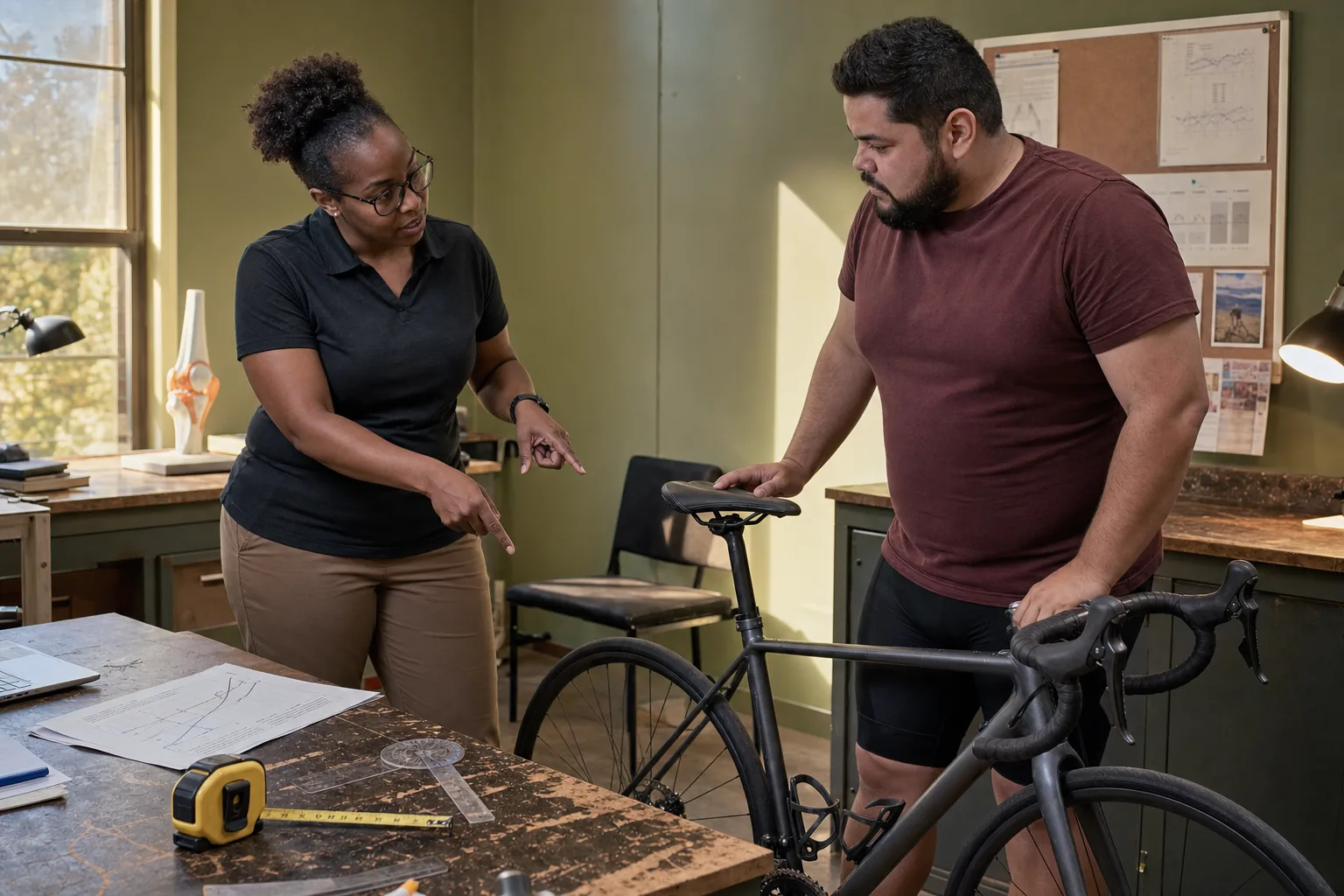
BaselineFeatured field guide
How to set your saddle height: the three methods, compared honestly
LeMond's 88.3%, Hamley's 109% and the Holmes knee-angle method — what the research actually says, a worked example, and a step-by-step you can do at home tonight.
Read the complete guide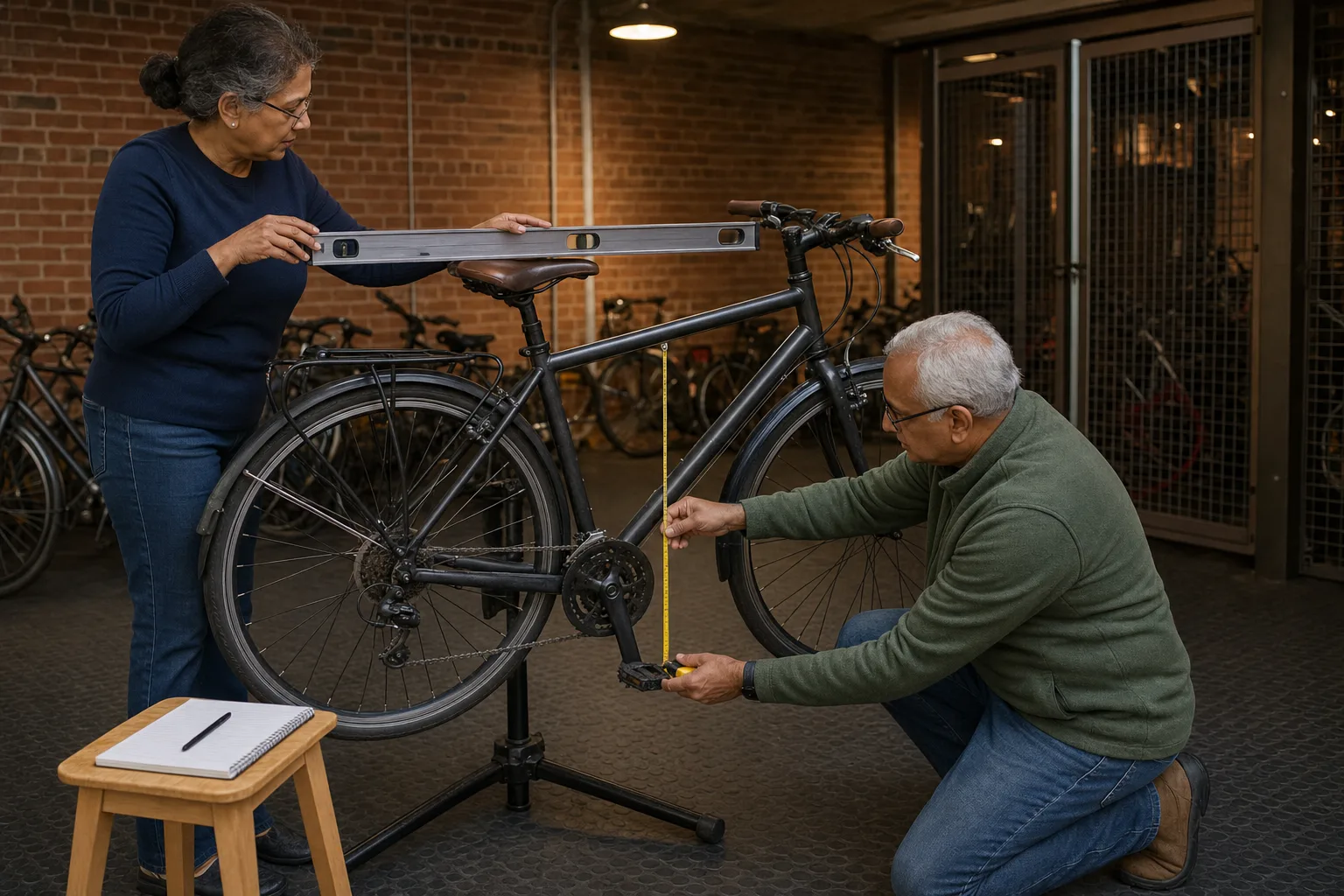
02Method
Change one thing, then re-check
The fastest way to a good fit is small, reversible steps you can actually measure.
Read guide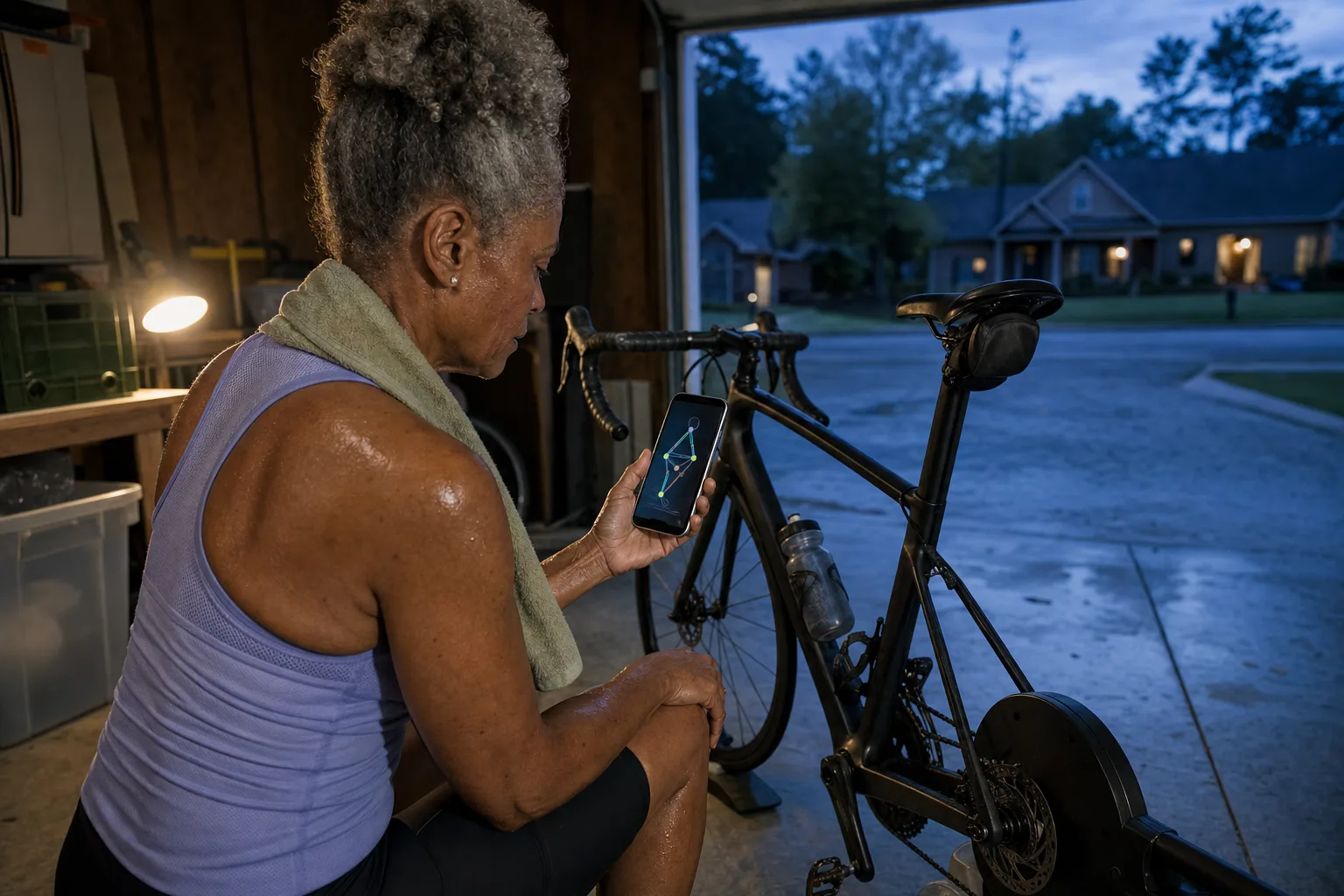
03Home workflowIn-depth
DIY bike fit at home: the complete 15-minute guide
Everything you need to fit your own bike — the gear, the order of operations, the formulas that hold up in research, and how to verify the result with your phone camera. Free, honest about limits.
Read guideTopic 023 guides
Shape the position
See how saddle, cranks and cockpit change the geometry between rider and bike.
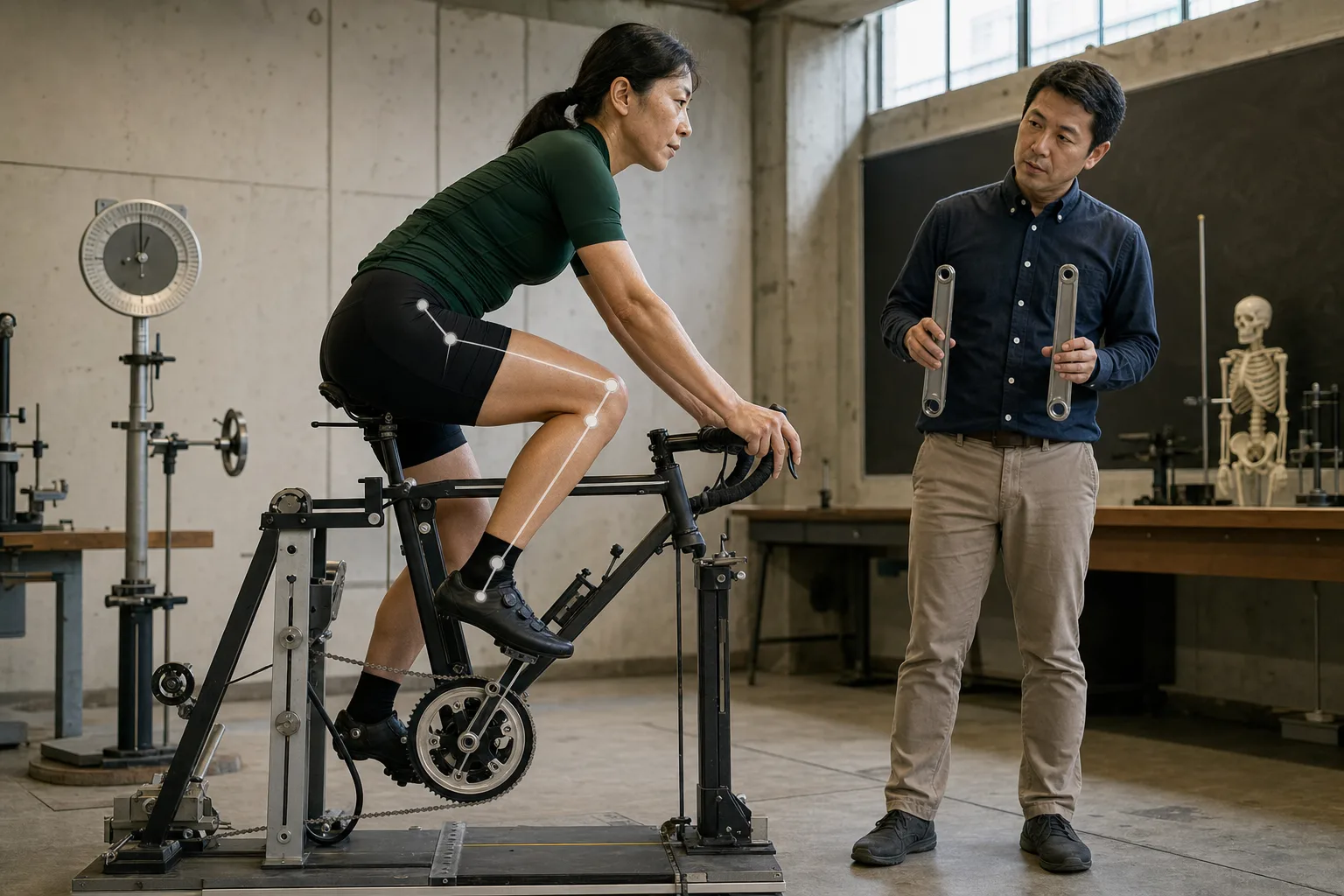
CranksFeatured field guide
Crank length: why power doesn't care, and your hips do
Across cranks from 120 to 220 mm, maximal power changes by about 4%. What crank length really changes is how far your hip and knee fold on every stroke — how to size it, and the saddle-height rule everyone forgets.
Read the complete guide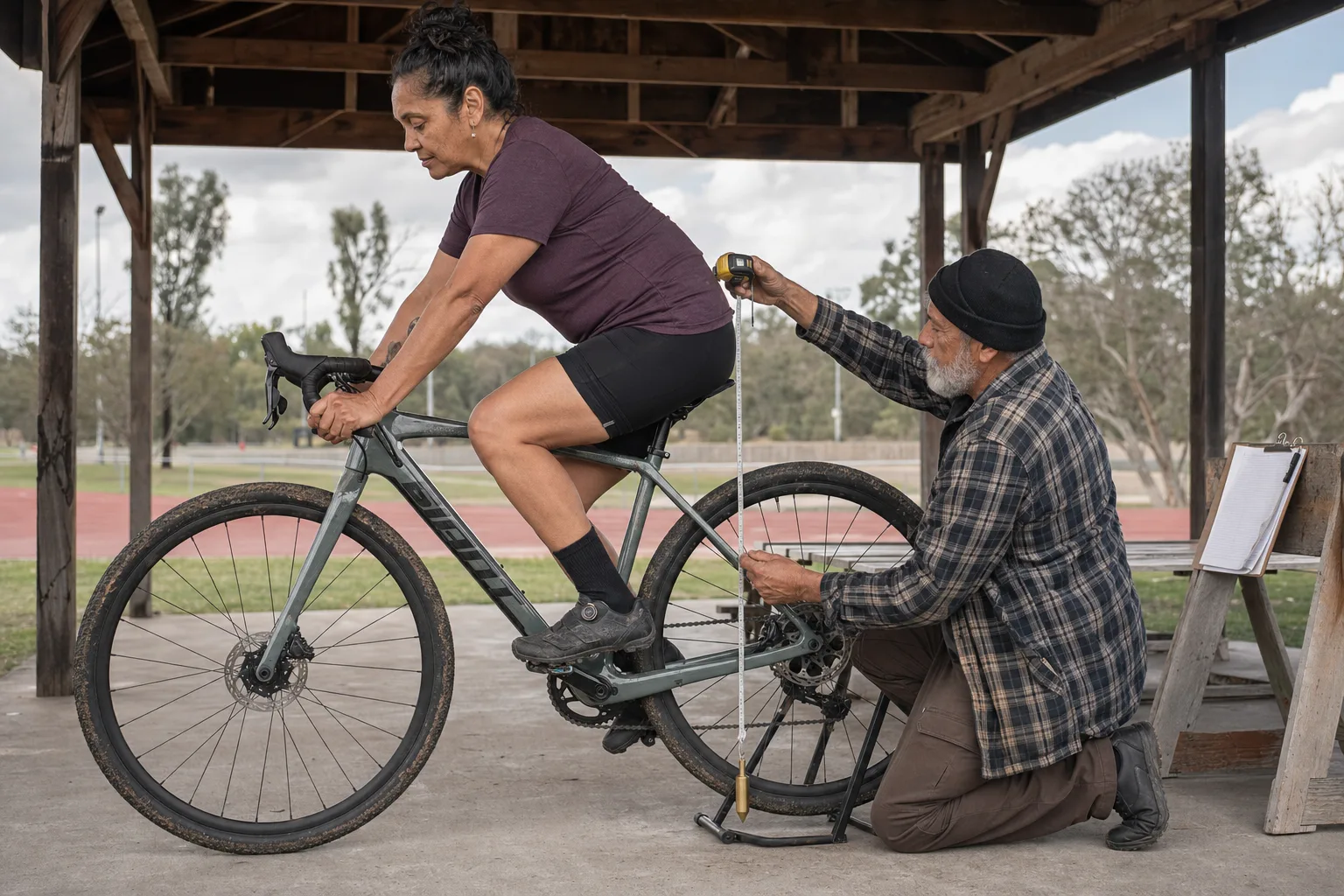
02SaddleIn-depth
Saddle setback and KOPS: a useful convention, not a law of physics
Knee-over-pedal-spindle has guided saddle fore-aft since the 1970s. The physics behind it doesn't hold up — yet it lands most riders somewhere sensible. What setback really changes, typical ranges, and the height coupling that catches everyone.
Read guide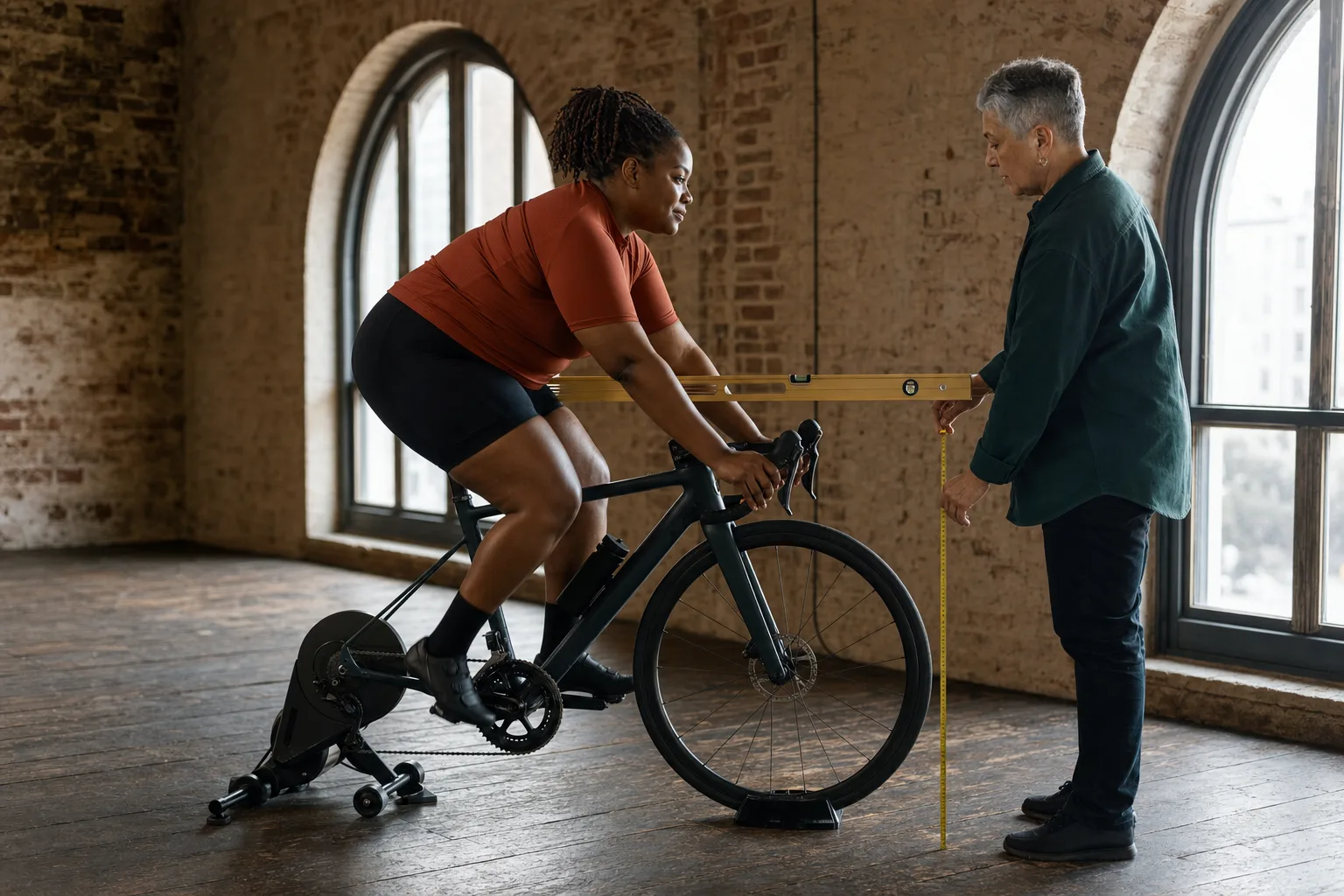
03CockpitIn-depth
Handlebar drop: aero is real, but only in a position you can hold
In elite testing the aero position saved ~100 W of drag for ~9 W of metabolic cost — but the flatter your trunk, the worse your body performs. How to measure drop, pick a sensible band, and read the symptoms of overdoing it.
Read guideTopic 034 guides
Make better decisions
Separate rules, goals and confidence from claims the evidence cannot support.
Decision guideFeatured field guide
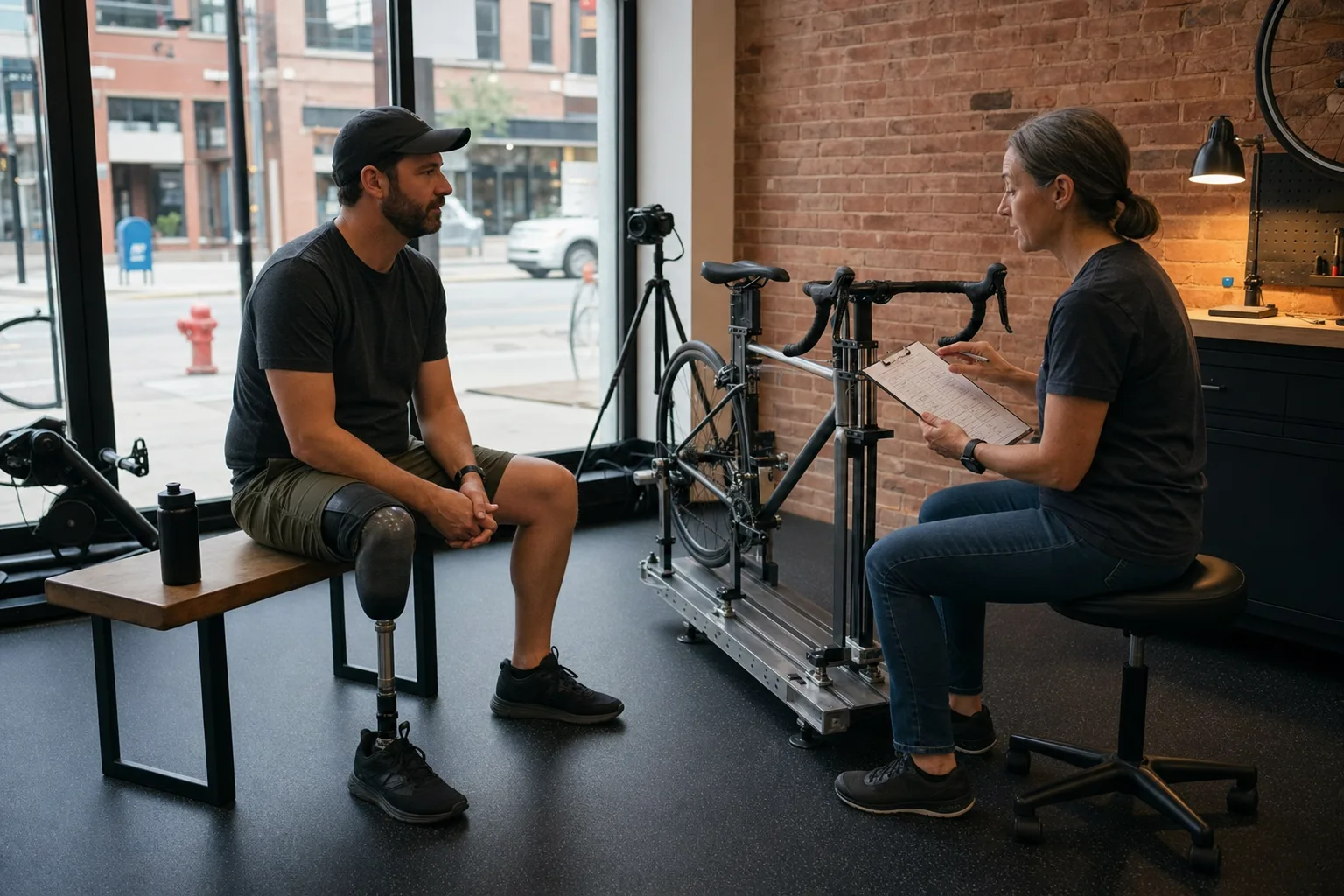
How much does a bike fit cost — and when is a studio fit worth it?
Studio fits run $150–400 (300–800 zł in Poland) for 2–4 hours of expert attention. What that money actually buys, what a free science-based starting point covers, and the sensible order to spend in.
Read the complete guide
02Goals
Your best fit depends on what you're trying to do
Comfort, endurance, racing, and aero pull in different directions. There is no single 'correct' position.
Read guide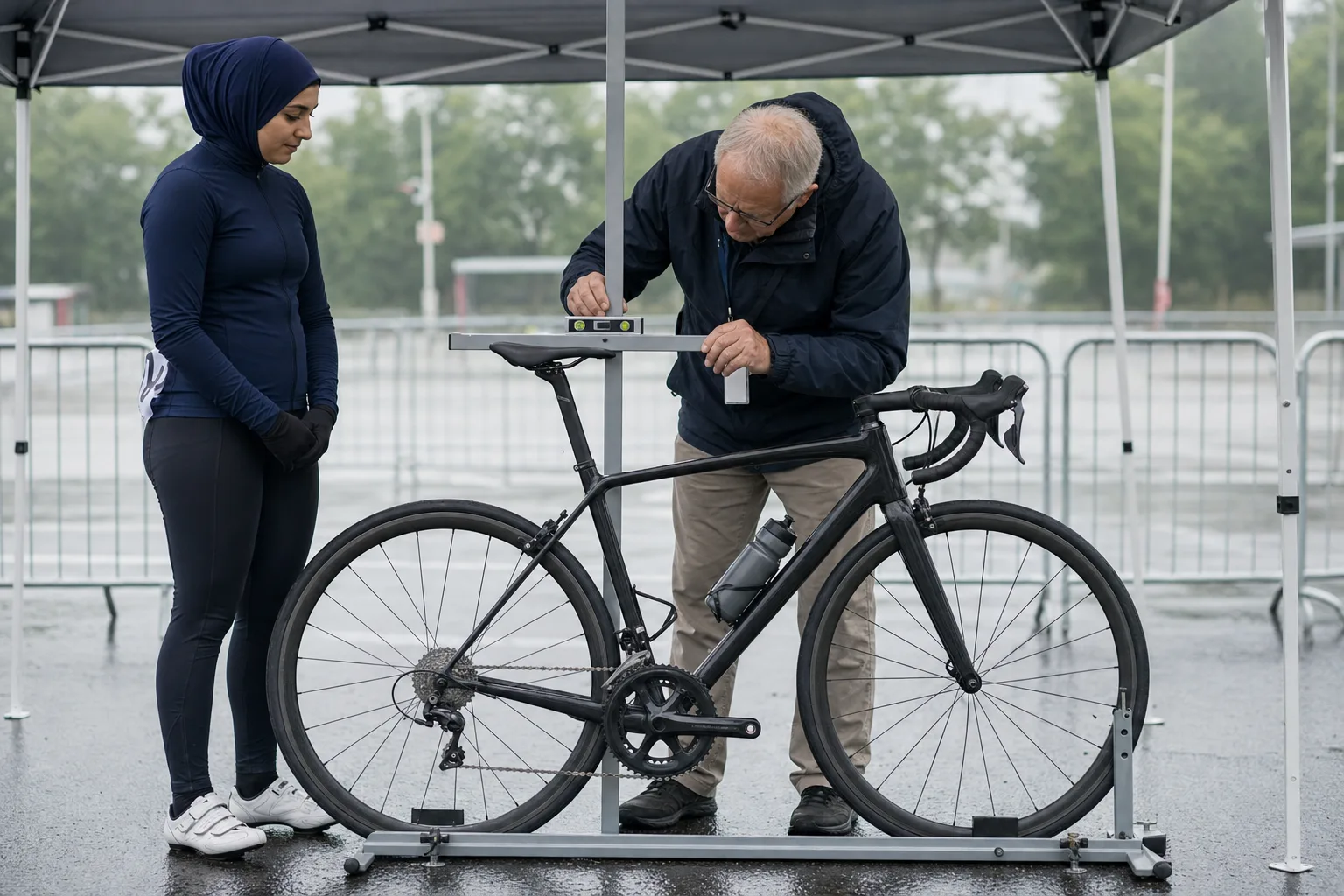
03Rules
“UCI-legal” is not the same as “good for you”
Race rules constrain where parts can go. They say nothing about your comfort, health, or accessibility.
Read guide
04Confidence
Why this app talks about confidence so much
A phone video has real limits. Honest uncertainty beats a confident wrong answer.
Read guideTopic 043 guides
Know when to stop
Use discomfort and red flags to decide whether to adjust, revert or involve a professional.
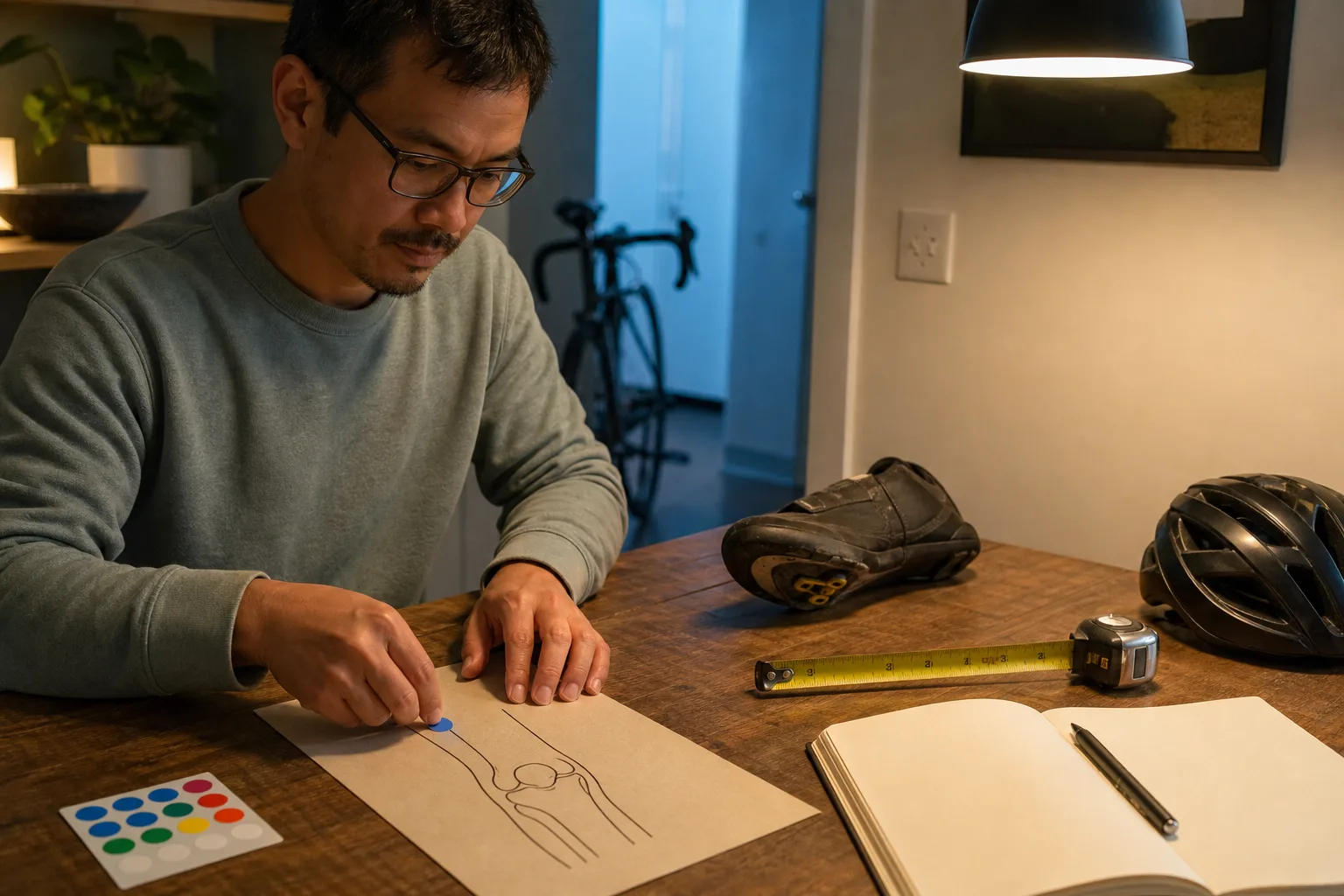
Knee symptomsFeatured field guide
Cycling knee pain by location: bike-fit hypotheses to check
Front, back, inside or outside knee discomfort can suggest different fit checks, but location is not a diagnosis. Use these sourced hypotheses for one small, reversible trial — and know when to stop adjusting.
Read the complete guide

OpenBikeFit helps you optimize bike fit and comfort and flags when you should see a professional. It is not a medical device and does not diagnose, treat, or cure any condition. Persistent, severe, traumatic, neurologic, vascular, or non-mechanical symptoms should be evaluated by a qualified clinician. Suggestions are starting points to test, not prescriptions.